Physical Address
304 North Cardinal St.
Dorchester Center, MA 02124
Physical Address
304 North Cardinal St.
Dorchester Center, MA 02124


Chinese Herald columnist Skee
When I was doing workplace coaching, many Chinese people in overseas workplaces had a similar problem: they worked very hard and did well, but no one seemed to care in the team and they were always invisible to others.
Sometimes, when promotions or new opportunities arise, the names mentioned by leaders are not those who have worked the hardest, but those who are more likely to be noticed.
This is not necessarily a question of ability;Often related to a workplace ability – visibility.
1. Working hard does not always mean being seen.
The education that many Chinese people have received since childhood is: “If you do things well, people will naturally see it.”
In some cultural contexts, this logic does hold. But in many Western workplaces, things are often not that simple.
Leaders often manage multiple projects and team members simultaneously, and they don’t necessarily see every detail. If a person is used to completing tasks quietly but rarely actively shares progress or results, then these efforts can easily be ignored.
Over time, a common situation will occur:
The person who works the hardest is not necessarily the person who is remembered the most.
In other words, ability determines whether you can get things done, while visibility often determines whether others will think of you when the opportunity arises.
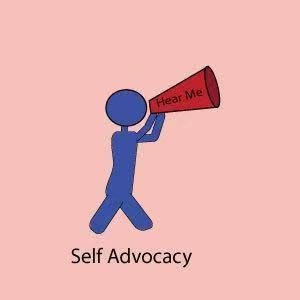
2. Why are many Chinese not used to “Self Advocacy”?
For many overseas Chinese, it makes people feel uncomfortable to take the initiative to mention their contributions. Some people worry that this will appear to be boastful. Some people feel that it is better to let others see their efforts, contributions, and achievements.
This idea is actually related to cultural background. In many Asian cultures, humility is seen as a virtue, and placing too much emphasis on personal achievements may be seen as not being low-key or Lei Feng enough. Not only do many people not realize the need for self-advocacy, they are also embarrassed to say it and don’t know how to say it.
butIn many Western workplaces, sharing results is not seen as showing off, but as part of communication.Team members need to know what each other is doing so they can collaborate and make better decisions.
In fact, many career development studies point out that“Being seen” itself is an important factor in career growth.
For example, Harvard Business School professor Herminia Ibarra proposed in her research on career development that a person’s career development not only depends on work performance (performance), but is also closely related to how others see you (image) and how many people your work is known to (exposure). In her book Act Like a Leader, Think Like a Leader (Harvard Business Review Press, 2015), she points out that the career development of many professionals is stagnant not because of lack of ability, but because of a lack of sufficient “exposure” and cross-team visibility.
in other words,Ability determines whether you can get things done, while visibility often determines whether others will think of you when the opportunity arises.
On the other hand, organizational behavior research has also found that people are often affected by the availability of information when evaluating the performance of their colleagues. American psychologist Laurie A. Rudman pointed out in a study published in the Journal of Personality and Social Psychology (1998) that those who can moderately express their contributions are often more likely to be evaluated as more capable and have greater leadership potential.
This is not because they are truly better than others, but because they make it easier for others to understand their value.
Therefore, in a cross-cultural workplace environment, expressing one’s work appropriately is actually an important professional communication skill.
3. Self-advocacy does not mean arrogance or conceitedness
When many people hear “self-advocacy”, they think of boasting or promoting themselves. But in fact, healthy self-expression is often very natural and professional.
For example, during a project meeting you could simply share:
(This week I conducted an in-depth analysis of the customer and summarized and identified two possible solutions)
(I have just drafted this report and welcome your comments and suggestions).
These expressions are not about showing off, but letting the team know about your work progress and contributions.
When opportunities arise, you can also express your interest appropriately, for example:
“This sounds like a meaningful and challenging project. I’d love to be involved if there’s an opportunity.”
If you want to further enhance your credibility, you can continue:
“I was involved in the ABC project in the past, and I was responsible for developing the roadmap/successfully delivering XYZ.”
This kind of expression is both proactive and not forceful. Appropriately use a brief introduction to your performance to recommend yourself and strive for yourself. Even if you cannot win, you will still leave an impression on your own team or cross-team leaders and colleagues. Maybe for the next project, they will remember your relevant experience and offer you an olive branch.
4. Let others see your value
In the cross-cultural workplace, many overseas Chinese do not lack ability or hard work, but sometimes they are ignored because they are too low-key.
When a person can both complete work stably and share results appropriately, it is easier for leaders and teams to see his contribution and think of him at critical moments.
Over the long term, this visibility translates into professional credibility and opportunities.
Moderately expressing your thoughts and sharing the results of your work is not pride, but a professional communication skill.
When the opportunity comes, maybe you can ask yourself a question:
If people don’t know what I do, how can they think of me?
If my boss doesn’t know that I want to challenge myself, how can he think of me when there are new projects or opportunities for further study?
sometimes,Making yourself visible is part of professional growth.
Related reading: