Physical Address
304 North Cardinal St.
Dorchester Center, MA 02124
Physical Address
304 North Cardinal St.
Dorchester Center, MA 02124


Preface
Recently, a poll in the Australian political arena dropped a shock bomb: 24% of voters preferred One Nation, and the support rate surpassed that of the Alliance Party.
Nearly 80% of the public believe that there are too many immigrants. What is even more surprising is that the “anti-immigration” claims are being promoted by a large number of new immigrants themselves.
This trend has not only stirred up the Australian political arena, but also brought new uncertainties and challenges to various ethnic minority communities, including the Chinese.

Polls show that with the strong rise of One Nation, the support ratings of both the Labor Party and the Coalition are declining.
1
Great changes in public opinion:
widespread concerns about mass immigration
IPA’s research points out that calls for tightening the country’s borders are no longer the exclusive position of traditional conservative voters, and more and more new immigrants to Australia have joined this ranks.
According to the latest data from the Resolve Political Monitor,One Nation’s first preference vote support has climbed to 24%, a figure that even puts it beyond the established political force-the Alliance Party.
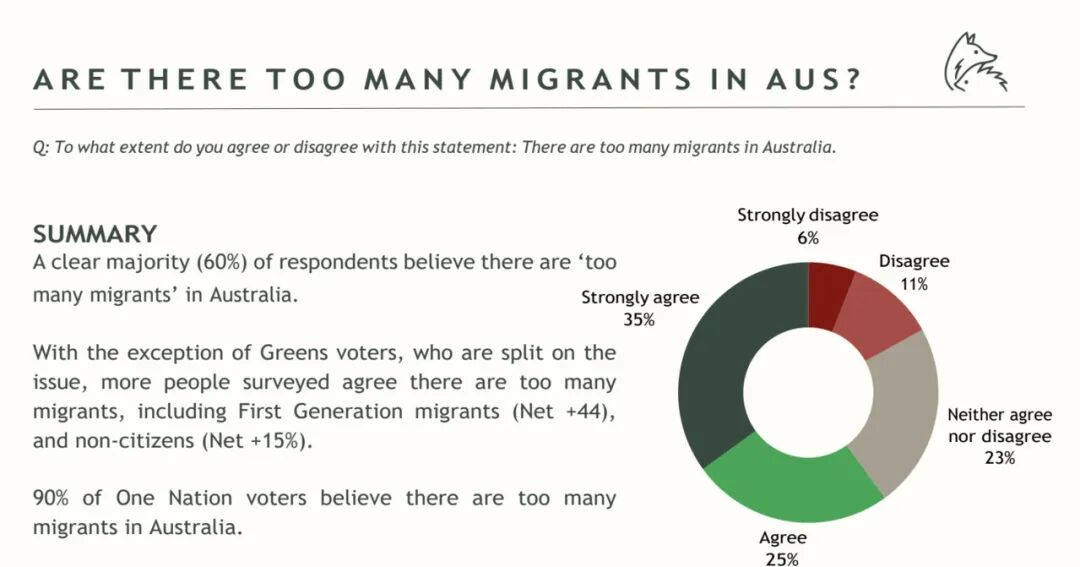
Polls show one in six Australians think there are “too many” immigrants. Image: Supplied
Survey data reveals a shift in social sentiment.
The investigation shows thatAs high as 79% of Australians support a significant reduction in annual net migration to 100,000 or less, which is in sharp contrast to the average annual figure of 424,000 during the current Prime Minister Anthony Albanese’s government.
Surprisingly, this sentiment is not unique to conservatives.
Among first-generation immigrants, support for cuts reaches as high as 75%; among young people aged 18 to 24, the figure also reaches 72%.

Identity crisis and distrust of government
This dissatisfaction with the status quo stems from a profound “identity crisis.”
More than half (54%) of the respondents said that Australia today feels strange to them and is no longer the home they remember. This sentiment is particularly strong among supporters of One Nation (86%) and the Coalition (57%).
At the same time, the public is also full of distrust of the government’s motives;Nearly half (48%) of Australians believe that behind the federal government’s promotion of large-scale immigration, there are hidden political considerations to consolidate its own vote base.
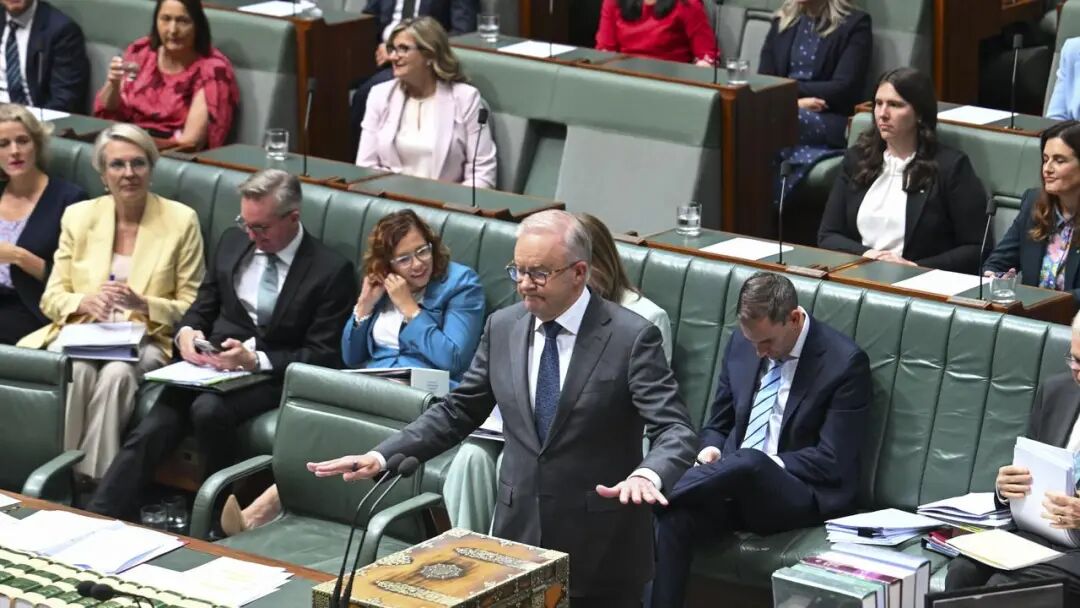
Nearly half of those surveyed questioned the motives behind the government’s immigration policies. Image: NewsWire/Martin Ollman
IPA deputy executive director Daniel Wild pointed out that this series of data reflects the long-term failure of the Australian political system.
He criticized that the government has promoted “uncontrolled large-scale immigration” for many years, but failed to simultaneously build the necessary infrastructure and lacked effective values screening for new immigrants.
This view has gained widespread resonance among the public:As many as 77% of respondents advocated that new immigrants should sign and abide by a clear Australian values agreement, otherwise they should be deported.

Prime Minister Albanese hit back hard:
One Nation is “tearing Australia apart”
Faced with the strong rise in support for One Nation and the social controversy caused by its leader Hanson, Prime Minister Albanese launched a fierce counterattack.
He publicly denounced One Nation as a political movement that specializes in “creating social divisions”. Its purpose is not to provide any positive solutions, but to focus on inciting confrontation and inflaming popular dissatisfaction.
Albanese stressed: “What Australia needs now is hope and a clear plan for the future, not endless internal divisions.”

Hanson’s approval rating continues to rise after a series of recent social incidents. Image: NewsWire/Liam Kidston
The direct trigger of this political confrontation is Hanson’s recent provocative remarks against Islamic teachings and the Muslim community.
These remarks have attracted widespread cross-party criticism and are considered to seriously violate Australia’s spirit of tolerance.
Albanese also firmly refuted the accusation made by the opposition coalition party that “there are too many immigrants and the standards are too low.”
He emphasized that Australia’s current visa approval, intelligence analysis and security review systems are “extremely rigorous and thorough.”

He also called on the media to fact-check the statements made by politicians, and pointed out that politicians should not mislead the public for political selfishness when they know that they are untrue.
The Prime Minister reiterated that this government has always fulfilled the strictest responsibilities in safeguarding national security and screening immigration qualifications.
This political confrontation over immigration is far more than just a rhetorical attack and defense between Albanese and Hanson. It has evolved into a national debate about Australia’s identity and future direction.

For the vast Chinese community, the debate is particularly nuanced.
On the one hand, concerns about the quality of life, social resources and public security have led some Chinese to become part of the group calling for tightened policies, confirming the complex trend of “new immigrants anti-immigration”.
But on the other hand, once xenophobic sentiments are incited, the lessons of history tell us that any ethnic minority may become a “scapegoat” for social conflicts.
When poll data coldly show the divisions in society, and when politicians’ words echo in our ears, the real question should perhaps be left to each of us:
Whether the current challenges facing Australia are caused by the number of immigrants or the failure of resource allocation and urban planning? Please leave your views in the comment area.
Related reading: