Physical Address
304 North Cardinal St.
Dorchester Center, MA 02124
Physical Address
304 North Cardinal St.
Dorchester Center, MA 02124

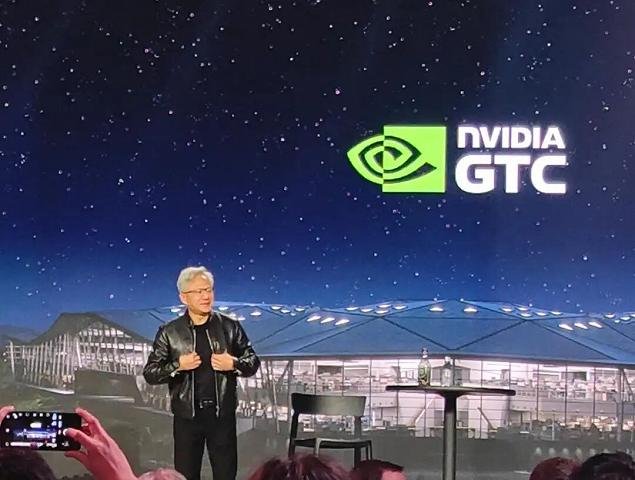
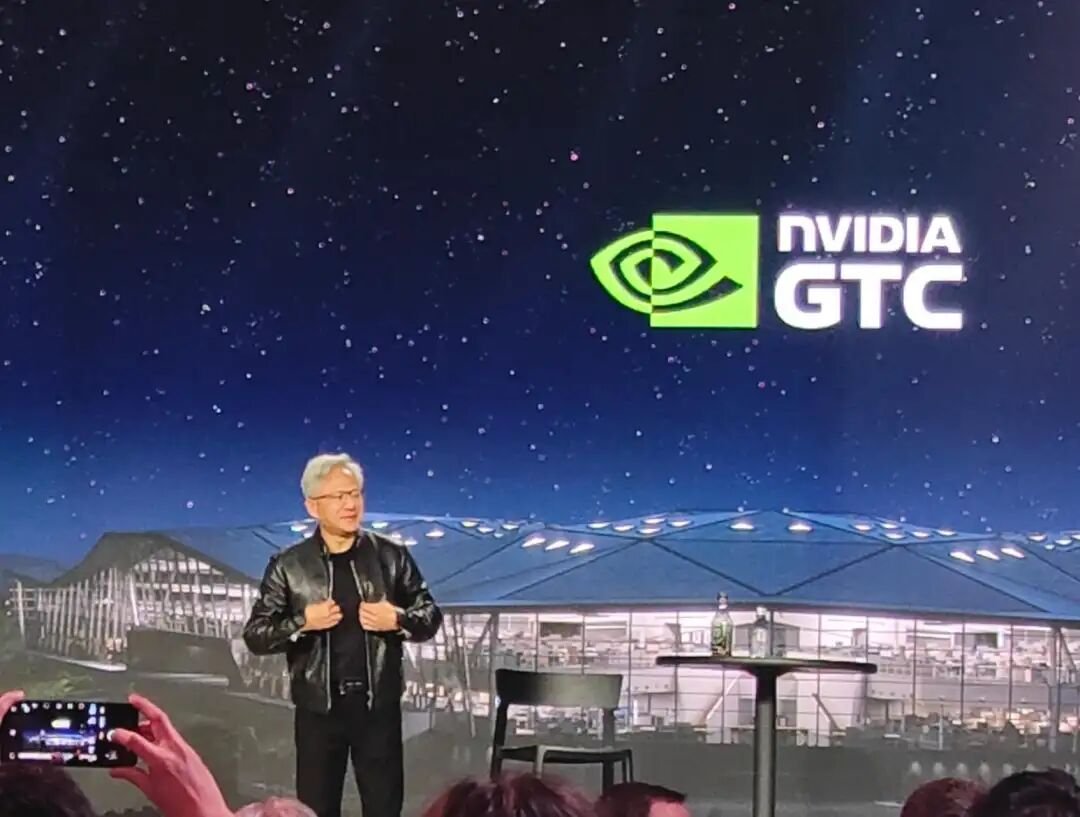
China Business News On the second day of the GTC conference speech, NVIDIA CEO Huang Jenxun accepted an interview with the media at a hotel near the GTC event venue. He sat in the center of the podium, still wearing a black leather jacket, with a series of Nvidia products next to him.
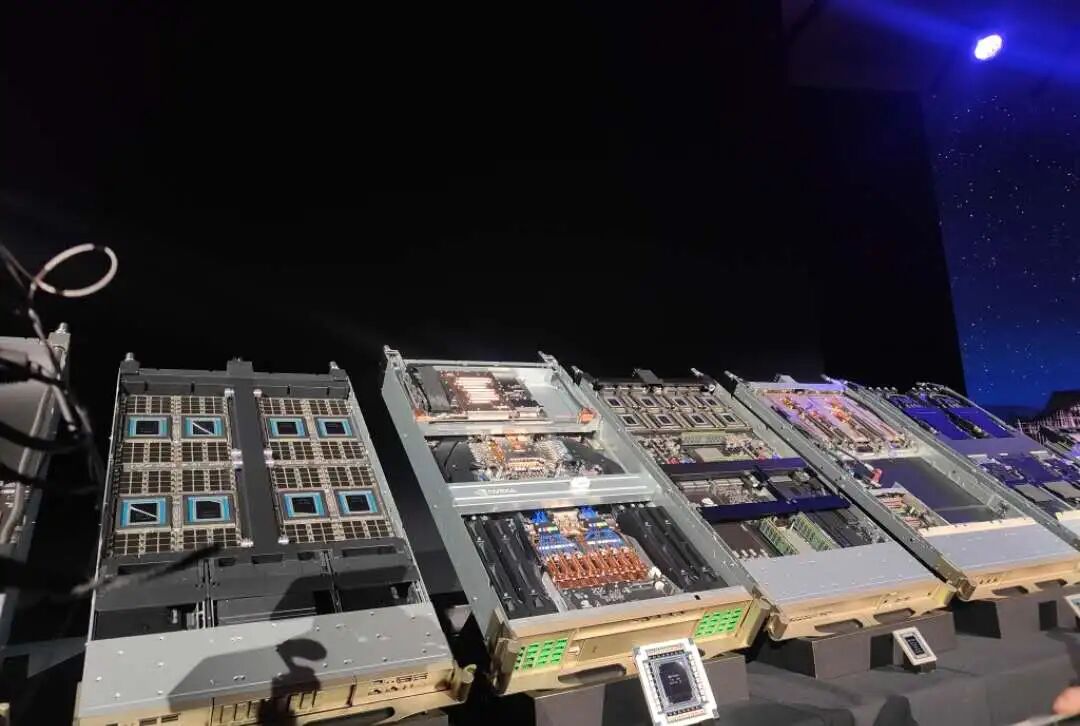
One day ago, Huang Renxun demonstrated Nvidia’s new product portfolio at the SAP Center in San Jose, including 7 chips and 5 racks of Rubin architecture, as well as new space computing modules and a new batch of open source models. Compared with the industry’s previous expectations for CPO products and new chips, Nvidia has actually released more things. Huang also raised Nvidia’s forecast for accelerated chip revenue to US$1 trillion in revenue.
In this interview, Huang Jen-Hsun talked about a richer content, not only involving newly released products and prospects for the AI market, but also about his expectations for changes in NVIDIA in 10 years, talked about the huge changes brought about by OpenClaw, and made a prediction: under the influence of AI, people will be even busier.
As an AI infrastructure provider, NVIDIA’s business development and revenue have become a benchmark for AI demand. “This time last year, I saw US$500 billion in order revenue from Blackwell and Rubin from 2025 to 2026.” In his speech a day ago, Huang Renxun revealed that now he sees this revenue from 2025 to 2027 reaching US$1 trillion.
Regarding the revenue forecast, he mentioned it again in the interview today. “The US$1 trillion only includes revenue from Blackwell and Rubin chips.” He emphasized that this part of revenue does not include revenue from diverse businesses such as CPU, Groq, storage systems, and Feynman architecture products. Nvidia’s revenue forecast of $1 trillion is based on business visibility and purchase orders, and Nvidia is confident in this.
“NVIDIA is still growing rapidly.” Huang Renxun said that NVIDIA received the largest number of orders in history in the last quarter, and growth is still accelerating. Changes in the way people use computers have brought about a large demand for tokens.
“In the past, people still used computers to input data and retrieve data. This was the old way of using computers. But in the future, computers are actually manufacturing machines and systems for producing tokens. There are still very few computers in the world used to produce tokens, and more are used to train AI. The process of AI reasoning to create more tokens has just begun.” Huang Renxun said.
To cope with the growth in computing demand, manufacturing capabilities must be considered. Huang Renxun responded that there are many manufacturing capacity issues that need to be resolved. Taking storage as an example, AI needs the memory capabilities brought by storage. Short-term memory, working memory and long-term memory must all be considered. As computing systems scale vertically and horizontally, storage is an important issue that needs to be addressed. The performance of storage systems must be greatly improved, and NVIDIA is reinventing storage systems for AI.
Specifically, different memory technologies are used in data centers, including HBM and LPDDR. Nvidia was the first manufacturer to use LPDDR4 in data centers. Now it uses LPDDR5, and its next generation products will also use LPDDR6. To ensure supply, Nvidia partners with Samsung to manufacture Groq and works with every memory supplier.
 Business goes far beyond chips
The diversity of NVIDIA’s business was fully demonstrated at this GTC conference. Even if it only focuses on the data center business, Nvidia no longer only emphasizes the performance of the GPU. The Rubin architecture platform contains 7 chips and has added the Groq 3 LPU that was previously launched after obtaining Groq technology authorization. More and more work has been done on the network side. This time GTC launched the NVL72, which integrates 72 Rubin GPUs and 36 Vera CPUs, as well as ConnectX-9 SuperNIC and Spectrum-6 SPX racks.
Unlike the past emphasis on the versatility of GPUs, NVIDIA has also begun to emphasize the different computing capabilities required for different AI workloads, responding to the new market brought about by the explosion of AI inference demands.
During the interview,Huang Renxun revealed that in 2025, Nvidia decided to invest a lot of resources in AI reasoning.With the introduction of NVLink72, etc., the performance has been improved by 35 times and the cost is 1/5 of the original. He also introduced the concept that each token from a different scale model is different. For today’s main token production needs, Rubin is still an important bearer, but new market segments have emerged. The model is getting larger and the context is getting longer, which means that the inference speed has to become faster. Combined with new chip combinations, computing can meet various needs.
Previously, Nvidia’s close relationship with large cloud vendor customers was considered a revenue guarantee, but it was also a risk. In the interview, in addition to product diversification, Huang Renxun also emphasized Nvidia’s customer diversification.
“Many people have forgotten that NVIDIA’s business goes far beyond chips. NVIDIA helps customers build AI factories around the world. Customers not only need chips, but also software, etc.” Huang Renxun said,40% of Nvidia’s revenue comes from diverse businesses such as physics AIsuch as self-driving cars. This 40% business is considerable, and it is impossible for Nvidia to operate these businesses only as a chip manufacturer. In addition, 60% of NVIDIA’s revenue comes from cloud vendors, but Huang Renxun emphasized that large cloud vendors have a lot of business brought by NVIDIA, and cloud vendors need NVIDIA’s products to provide services.
Of this 40% revenue, physical AI is an important component, including both autonomous driving and robots. These two businesses have also become the focus of this GTC.
The day before, Huang Renxun said that the OpenAI moment for self-driving cars has arrived. In the interview, he talked about the development process of this part of NVIDIA’s business. According to reports, the automotive business once accounted for 0% of Nvidia’s business, but created 90% of the costs. “I started working on autonomous driving 10 years ago. There was only one person in the team, and now there are thousands of people working on it. Almost everything we did at the beginning cost a lot of money and time, and even brought some adverse consequences, but we must have faith.” He said that Nvidia’s autonomous vehicle business includes three computers, computers for training, data generation and simulation, and AV systems. Many car companies around the world now purchase one or more of the three computers from Nvidia.
During the interview, he also looked forward to the development of robotics technology. “Robots still face a lot of problems today, but they are just engineering problems. You can see them walking around and starting to do things. Once you start to see the existing technology improving, it will only take less than 5 years to solve the remaining problems. I am very sure that we will see very good robots.” Huang Renxun said that although there are still many challenges to deal with, joint motion problems and robot cognition problems will be solved within 3 years. There will be something like OpenClaw running inside the robot, and then there will be other visual language action models to control the robot’s pronunciation and movements.
NVIDIA’s in-depth participation in the AI ecosystem has also attracted attention from the outside world. NVIDIA has deepened relationships with some AI manufacturers through investment and other means. “We are investing in the next ‘Google’ and the next ‘Amazon’.” Huang Renxun said that Nvidia provides financing for companies that it believes will be successful because it sees the opportunities faced by these companies and hopes to help the ecosystem quickly expand its scale.
He also emphasized the importance of cash, saying Nvidia needs cash to support suppliers and partners and invest in the ecosystem, but still maintain substantial free cash flow. He revealed that Nvidia will conduct repurchases and use 50% of its free cash flow to return investors, which is a higher proportion than last year.
In Huang Renxun’s AI “five-layer cake” theory, AI applications are at the top layer, directly creating value for people and driving the growth of demand for lower-layer AI infrastructure and other things. OpenClaw, which has become popular around the world this year, is a typical example of AI applications. It is also an Agentic AI product that Huang Renxun is optimistic about. At this GTC conference, Nvidia launched the NemoClaw software stack for OpenClaw, and also carried out build-a-claw activities at the GTC site.
Why are you so optimistic about OpenClaw? Huang Renxun believes that the emergence of this product will actually allow people to concentrate the power of building intelligent agents on one platform, thereby accelerating the popularity of intelligent agents.
“When OpenClaw came along, I realized that we finally had an open source agent-based AI system that could almost be used as a standard to contribute to this open source project without having various efforts scattered among different projects. If we can make this project good enough, everyone can Every company can start to build its own agent-based AI strategy. “Huang Renxun explained that in the next 30 or 60 years, people will give OpenClaw more capabilities, just like they contributed to projects such as Linux before, and now there is a project around the world that can contribute to it.
“Imagine being able to install OpenClaw with just one line of code, and then learn how to use it, and then you can ask it to complete some tasks, such as designing a kitchen, and it will learn to use the tools on its own, keep trying, and then it will learn architectural design. Then you ask it to design a living room, and it will be able to complete the task better,” he said.
Regarding the security issues brought by AI, he said that people have open source models that can be used to build agent AI, but a bigger problem is security, governance and privacy issues. However, scaring people with a “sci-fi version” of AI is a bit arrogant. People still need AI to do many things. For example, AI systems are needed to maintain network security, just like white blood cells protect the safety of the body.
also,As AI products such as OpenClaw are increasingly used, Huang Renxun also made a conclusion: AI will not make people lose their jobs, but will make people busier and busier.
“Honestly, I feel like I’m getting busier and busier. Compared to 6 months ago, I’m getting busier every day. The reason is that the feedback on work progress is getting faster and faster, and the number of projects is growing faster.” He revealed that Nvidia is developing faster than ever before, because more and more AI technologies are used to allow work to be completed faster, and all projects are accelerating.
What impact will AI have on people’s jobs? Jen-Hsun Huang believes that busyness will be a common situation for everyone.“Many people say that with the arrival of AI, we will have no work to do. In fact, it is exactly the opposite. The emergence of computers has made us busier, the Internet has made us busier, and mobile devices have made us extremely busy.” He said that AI allows tasks to be completed very quickly. Soon people only need to write instructions, definitions, and then use the agent. The results will be fed back within 30 minutes, and everything is back in human hands. In the past, the process was for people to write product specifications, the team would work on it for a month, and then do other things a month later. Life was very leisurely. What was accomplished in a month can now be accomplished in 30 minutes, and people will always be in the process of performing critical tasks.
“We are all busier than ever. When was the last time you sat in a rocking chair on the porch with a glass of lemonade and watched the sunset? I can’t remember, except that the last time I saw a movie was almost 100 years ago.” Huang said the busy trend is likely to continue.
This busyness is also reflected in Nvidia’s future development. Nvidia had approximately 42,000 employees last year. Huang Renxun predicts that Nvidia will also be “super busy” in the future. “In 10 years, we are expected to have 75,000 employees. The scale must be as small as possible, but it must reach the necessary scale. In addition, there will be 7.5 million intelligent agents, which will work around the clock.”
Huang Renxun believes that this kind of busyness is beneficial to the development of the company and society. For Nvidia, the next 10 years will be about solving some extremely complex problems. Just like problems that people couldn’t think of 10 years ago can be solved, 10 years later, some things that seemed impossible will become feasible. At the same time, things that still consume a lot of energy, time and cost now will reduce the energy, time and cost required in the future to billions of times. “People will feel like superhumans,” Huang said.
“Forty years ago, when I graduated from school, what we are discussing now did not even exist in science fiction at that time. The number of problems that we humans now imagine and set out to solve are millions of times what we could have imagined 40 years ago. I am very sure that we will still have many problems to solve in the future.” Huang said. When looking at the key risks facing the past year and the coming year, Huang also joked that his thoughts are very simple: don’t get fired, don’t get bored, and stay alive.
For society, he believes, employment will also change.“Many companies still lack enough labor, and robots can fill this gap and bring economic growth, and many people will be hired to manage machines and help intelligent agents grow. The reason I say this is, if you compare today with 100 years ago, there is a straight line: more jobs, more economic growth. We will get gainful jobs, and of course every job will be different. Some jobs will disappear, and some jobs will be new. AI will change everything.” Huang Renxun said.
Related reading: