Physical Address
304 North Cardinal St.
Dorchester Center, MA 02124
Physical Address
304 North Cardinal St.
Dorchester Center, MA 02124

Reprinted from: China News Weekly
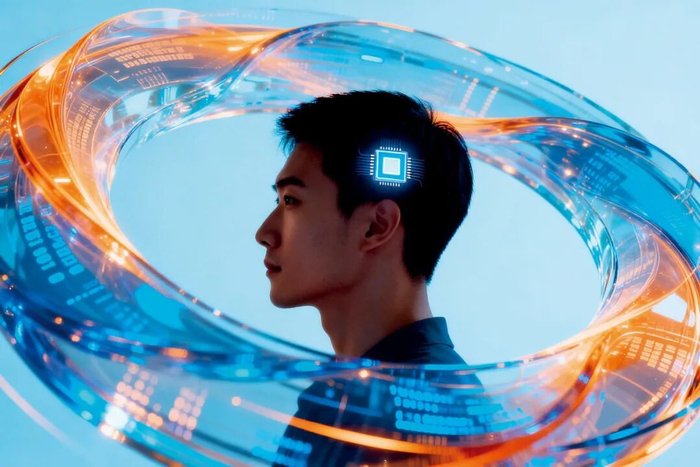
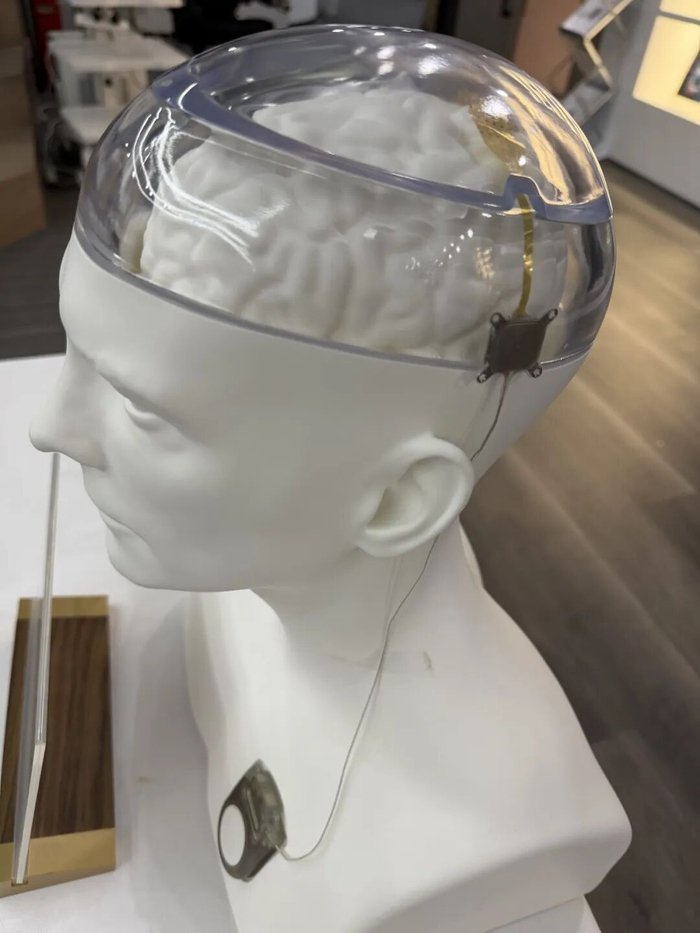
In the operating room of the Neurosurgery Department of Huashan Hospital Affiliated to Fudan University in Shanghai, doctors made a small opening in Zhang Yang’s skull and attached a flexible film to the surface of his cerebral cortex. This is the first fully implantable, fully wireless, and fully functional brain-computer interface clinical trial in China. Core components such as electrodes, chips, and batteries are all implanted in the body.
Zhang Yang, 28, is a high-level paraplegic. Eight years ago, an accident severely damaged his spine. His brain was clear but he could not control his body. Eating, turning over, and sitting up independently became a luxury. On the fifth day after surgery, Zhang Yang successfully moved the screen cursor with his mind during his first training session. Now, he can independently play games, shop online, send red envelopes, control smart home devices, etc.
Zhang Yang’s experience is just a microcosm of the clinical exploration of brain-computer interfaces. This year’s National Two Sessions, brain-computer interface was written into the government work report for the first time, and was identified as one of the future industries to be cultivated and developed, along with quantum technology. Recently, the State Food and Drug Administration approved the launch of the world’s first invasive brain-computer interface medical device for quadriplegic patients with spinal cord injury. It can assist patients with hand grasping functions, marking its entry into the clinical application stage.
 AI mapping
“Patients with ALS and high paraplegia
It’s suitable for people”
Today, more and more hospitals across the country have opened brain-computer interface clinics.
On March 5, my country’s independently developed semi-invasive brain-computer interface system “Beinao-1” launched the seventh human implantation operation at Beijing Tiantan Hospital. In March last year, the country’s first brain-computer interface consultation and evaluation clinic was opened at Beijing Tiantan Hospital, recruiting trial participants from across the country. In May last year, the hospital established the country’s first brain-computer interface clinical ward. Subsequently, tertiary hospitals in Shanghai, Guangzhou and other places also successively opened related outpatient clinics.
The core of the brain-computer interface is to collect the electrical signals generated by brain neurons, decode them through algorithms, and then convert them into instructions for controlling external devices. The human brain has approximately 86 billion neurons, forming a complex information network through hundreds of trillions of synapses. The electrical signals between neurons are the physical basis of thinking, perception and action.
According to the signal collection method, brain-computer interfaces can be divided into non-invasive, semi-invasive and invasive. The degree of contact with the brain largely determines the accuracy of signal collection. Founded in November 2021, Brain Tiger Technology focuses on the research and development of invasive brain-computer interfaces. As of January 2026, the company has carried out more than 50 clinical trials in many top tertiary hospitals including Huashan Hospital Affiliated to Fudan University, and Zhang Yang is one of the participants.
Less than two months after the operation, Zhang Yang defeated Tao Hu, the founder of Brain Tiger Technology, in a video game competing for gold coins. Tao Hu recalled to “China News Weekly” that the moment Zhang Yang saw the gold coin, his brain directly had the idea of ”go and grab it”, and the system immediately executed it after recognizing it; but he himself had to go through the process of “seeing, thinking, and finger operation”, so he was naturally a step slower. Tao Hu said that in order to achieve a new round of breakthroughs in decoding algorithms, it is necessary to accumulate brain data from hundreds of patients with neurological diseases such as ALS and high paraplegia.
Many domestic experts interviewed pointed out that at present, the most clearly applicable people for implantable brain-computer interfaces are patients with severe loss of motor or language functions due to spinal cord injury, ALS, stroke, etc. Fan Dongsheng, chief physician of the Department of Neurology at Peking University Third Hospital, told China News Weekly that patients with high paraplegia have intact brain functions, but the spinal cord “highway” is broken and the limbs cannot respond.
The situation of patients with ALS is even more cruel: the brain is awake, but the nerves and muscles that control the body gradually decline, and eventually they are unable to even walk, talk, and swallow. Fan Dongsheng said that with the advancement of medicine, the survival time of such patients has been significantly extended. For them, the core value of brain-computer interface is not to regain mobility, but to reconnect with the outside world.
Gao Xiaorong, a tenured professor at Tsinghua University School of Medicine, has been engaged in brain-computer interface research for more than 20 years. In an interview with China News Weekly, he said that in 2018, his team designed a non-invasive visual brain-computer interface for patients with ALS, allowing patients to communicate by typing in Chinese through EEG signals. Li Xiaojian, founder of Weiling Medical, believes that for patients with ALS, the brain-computer interface is more like a “hospice care” tool, used to improve the quality of life rather than repairing neurological function or reversing the disease.
Tao Hu said that in the field of brain-computer interfaces in the United States, there are three main technical paths that have attracted the most attention: the first is the deep implantation solution adopted by Neuralink, a company founded by Elon Musk, which implants electrodes directly into the brain tissue through craniotomy; the second is Synchron’s vascular interventional solution; and the third is the cerebral cortex surface solution adopted by Precision Neuroscience, which is the direction that the Brain Tiger technology team is advancing.
So far, companies such as Synchron and Neuralink have completed multiple rounds of financing. Since January 2024, Neuralink has implanted brain-computer interface devices in 21 paralyzed patients, allowing them to use mobile phones, computers or mechanical limbs with their thoughts. Recently, Max Hodak, co-founder of Neuralink, said bluntly in a public interview: “The first batch of people who can live to be 1,000 years old may have been born now.” He defined 2035 as the technological “event horizon” and believed that after that, the collaborative breakthrough of artificial intelligence and brain-computer interface will bring human life to a new and unpredictable stage.
On March 13, the invasive brain-computer interface independently developed by Brighton Medical Technology (Shanghai) Co., Ltd. officially obtained my country’s Class III medical device registration certificate. It is understood that before this medical device was approved, multi-center confirmatory clinical trials were carried out in 11 tertiary hospitals across the country. Six months after surgery, 22 of the 32 patients were able to complete grasping movements without the support of medical devices.
However, Fan Dongsheng admitted to China News Weekly that the number of patients who truly need and are suitable for brain-computer interface surgery is very limited. He believes that at present, it is too early for hospitals to routinely open brain-computer interface clinics.
Long-term stability remains a challenge
According to many interviewed experts, brain-computer interface technology is still far from mature.
Andrew Schwartz, a professor of neurobiology at the University of Pittsburgh, told China News Weekly that at present, brain-computer interfaces are effective in carefully selected cases, but in aspects such as movement and communication, efficiency and accuracy are still low. Li Xiaojian analyzed that the brain-computer interface is like a “big brother”. It can be used, but it is still far from “easy to use”. This obviously does not meet the requirements of evidence-based medicine.
Regarding the invasive brain-computer interface, Tao Hu described the surgical process as “like inserting a needle softer than cotton into tofu accurately.” Gao Xiaorong said that compared with invasive brain-computer interfaces, semi-invasive ones are safer because the latter has limited damage to brain tissue; once the former damages neurons, it is usually irreversible.
A deputy chief physician of neurosurgery at a domestic tertiary hospital told China News Weekly that the risks of the surgery itself are controllable, but the long-term stability after implantation is the challenge. He analyzed that the signal is usually the best when the electrode is first implanted. However, most of the electrodes implanted in the brain will degrade in signal quality due to biological reactions and material aging, and even the most sophisticated surgery cannot make up for poor electrode performance.
Li Xiaojian said that currently, the stable service life of implanted electrodes in the human body is generally two to three years. Song Enming, a researcher at the Institute of Optoelectronics of Fudan University, has been engaged in research on implantable neural electrodes and devices for a long time. In an interview with China News Weekly, he said that the surface of the brain is complex, the brain tissue is soft, and it deforms slightly with breathing. Electrodes must not only fit statically but also remain stable in dynamic environments.
Gao Xiaorong pointed out that for some brain-computer interface devices aimed at motor function rehabilitation, the relevant equipment generally needs to be removed after the rehabilitation is completed. Once implanted electrodes fuse with brain tissue, removal if they malfunction could cause further brain trauma. He emphasized that medical devices should follow the principle of “implantable and removable” and must consider safe removal when designing.
In January 2024, quadriplegic patient Nolan Abo received Neuralink brain-computer interface implantation surgery and became the company’s first subject. Abo was paralyzed after a diving accident in 2016. According to a report by The Guardian in February 2025, about a month after the surgery, about 85% of the electrode connections of the device implanted in his brain fell off, causing the electrodes to be almost unable to receive signals. Abo wanted the research team to make every effort to repair the device and even be willing to undergo another surgery, but the neurosurgeon did not recommend another craniotomy. In the end, Neuralink engineers used software adjustments to change the remaining about 15% of the electrode threads from reading single neuron signals to reading neuron group signals to maintain device functionality.
In addition, as brain-computer interfaces develop from signal reading to intervening in the brain, ethical issues become more complex. Marcelo Ineca, professor of artificial intelligence and neuroscience ethics at the Technical University of Munich in Germany, said in an interview with China News Weekly that brain-computer interfaces capture not only brainwaves and neural activity information, but may also reveal cognitive, emotional and behavioral patterns. Ineka proposed that its ethical assessment should follow the “principle of proportionality”: the deeper the intrusion and the higher the risk, the clearer the expected benefits must be.
Gao Xiaorong raised a deeper concern. It is difficult to confirm whether the implanted device is really “shut down.” From a technical point of view, the current artificial intelligence and system architecture cannot achieve “complete shutdown” in an absolute sense. As long as the system is still running, signals may continue to be collected and analyzed. This issue is particularly sensitive for technology involving the brain, because it does not face ordinary data, but human consciousness and memory.
Gao Xiaorong further stated that as AI and machines become more involved in brain-computer interface signal decoding and output, the boundaries of human autonomous expression will gradually blur. He gave an example. For example, there is no clear definition standard for how many words output in one minute actually come from brain signals, and how many are predictions and completions made by AI.
“There are so many people coming in now”
“There are currently a lot of people pouring into this field.” Liu Bing, founder of Shanghai Mingshi Medical Technology Co., Ltd., told China News Weekly. In recent years, he has clearly felt that the number of investors paying attention to brain-computer interfaces has increased rapidly. According to statistics from the Qianzhan Industry Research Institute, as of January 2026, there have been a total of 77 investment and financing events in the domestic brain-computer interface industry, including 24 in 2025. In January this year, Qiannao Technology completed approximately RMB 2 billion in financing, setting the world’s largest brain-computer interface financing besides Neuralink.
Li Xiaojian believes that most of the funds currently active in the field of brain-computer interfaces come from funds in the Internet or consumer fields. Such funds usually focus more on consumer medical or Internet-based applications and have a faster pace of entry and exit. However, professional medical funds that truly invest in medical equipment and clinical technology for the long term have not yet entered the market on a large scale.
He said that while Neuralink has brought popularity, it has also skewed the direction of the industry to a certain extent, making the narrative of the entire industry more and more like consumer technology, which has caused some medical funds that might have made moves to be more cautious.
Gao Xiaorong said that what supports the scale of the brain-computer interface industry will ultimately be a wider range of non-invasive applications. If brain-computer interface is to be truly industrialized, it needs to undergo three leaps: from medicine to health, and then to culture. He explained that in serious medical scenarios, the proportion of patients who really need invasive technologies is very low; after entering the health field, they can basically only rely on non-invasive technologies; if it expands to a wider culture and daily applications, it will be more difficult for people to accept implantable solutions.
From the perspective of market structure, non-invasive brain-computer interfaces occupy the mainstream share. According to data analysis and research company Precedence Research, the global non-invasive brain-computer interface market will account for approximately 81.86% in 2024. A research report released by Northeast Securities in February this year showed that the domestic brain-computer interface market size in 2024 will be approximately 3.2 billion yuan, of which non-invasive products account for as much as 82%.
Brain-computer interfaces must be attractive enough for people to pay for them. The deputy chief physician of the Neurosurgery Department of the above-mentioned tertiary hospital said for example that there is a “ceiling” in the brain-computer interface used for rehabilitation. Patients cannot use it to return to the level of walking as fast as flying, and can only achieve limited improvement on the original basis. He made a calculation: If this type of brain-computer interface is priced at 20,000 to 30,000 yuan, patients are likely not to buy it for slight functional improvements.
Li Xiaojian pointed out that for the brain-computer interface to truly succeed in the business model, it must have clear indications, a certain scale of patients, and a solid foundation of evidence-based medicine. Brain Tiger Technology’s current main revenue comes from the scientific research market focusing on basic research in brain science. Tao Hu said that brain-computer interfaces are not a track that can be quickly matured. Clinical trials must be carried out step by step and no necessary steps will be skipped just to keep up with the progress.
Song Enming pointed out that the implantable brain-computer interface is a complete signal transmission system, including front-end neural signal acquisition, signal processing and calculation, as well as back-end feedback and regulation. After further development, it will involve large-scale signal decoding, group data modeling, etc. Industry insiders analyze that in the long run, chips may become a key link in industrial development.