Physical Address
304 North Cardinal St.
Dorchester Center, MA 02124
Physical Address
304 North Cardinal St.
Dorchester Center, MA 02124

Source: Banyuetan WeChat public account
When “retirement” becomes an “opening ceremony” that has been delayed for many years, a group of elderly people aged 50 to 80 are picking up their schoolbags and flying across the ocean to redefine “old age” in sketching classrooms in Florence, Italy, tea ceremony workshops in Kyoto, Japan, and language classes in Barcelona, Spain. They do not go sightseeing to check in, but study immersively as students.
This quietly emerging craze for “mature-age students studying abroad” is not only a compensation for the regrets of youth, but also the active pursuit of spiritual enrichment and self-worth by China’s new generation of energetic elderly people. When enthusiasm collides with institutional gaps and social prejudices, this dream journey still requires more understanding, support and systematic response.
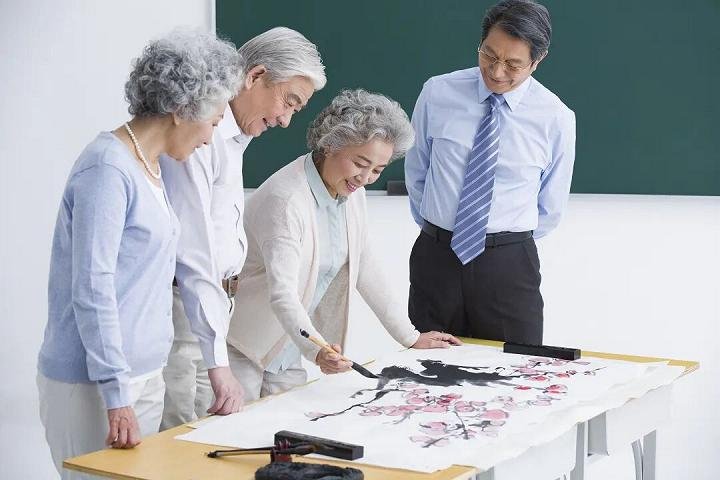
Sitting in the classroom of an art academy in Florence, Mr. Wang, an 83-year-old retired teacher from Shanghai, began his first systematic study of sketching. He had been waiting for this scene for more than half a century.
When he was 28 years old, he encountered a Raphael painting album at an old bookstall. From then on, the light and shadow of the Renaissance and the name “Florence” planted the seeds of yearning in his heart. Now, through a club that specializes in serving “mature” people, he has completed language preparation and interviews, and embarked on a several-week journey to realize his dream.
At present, some of the “new elderly”, mainly those born in the 1960s and 1970s, are no longer satisfied with the traditional retirement life of entertaining grandchildren or community leisure. Instead, they choose to pick up their schoolbags, go overseas, and restart their identity as students. This trend reflects the increasingly large “new elderly” group’s passionate pursuit of the spiritual world and self-realization, and also poses new challenges to existing social concepts, market services, and public policies.
“The moment I retired, it was a big shock. I didn’t feel old physically or mentally, but the familiar social rhythm suddenly stopped, and I felt a strong sense of discomfort and emptiness.” 56-year-old Zi Wenli said frankly. After retiring, the former senior media reporter and founder of an international educational institution found that “the choices for his generation, born in the 1960s and 1970s, were too limited.” Zi Wenli visited a number of senior universities and found that the course content was more basic and more like “reproduction” teaching rather than inspiring creation. “For example, they only teach how to draw a longevity peach, but don’t explain why they draw it like this. After learning it, they can’t draw anything else.” In her opinion, this is particularly out of touch with their generation’s inner needs of “changing their destiny through knowledge” and their desire for in-depth learning and updating of thinking. “We don’t just want to kill time, we want to regain a sense of value and even explore the possibility of a second career.”
The turnaround occurred at the end of 2024. Zi Wenli shared her thoughts on “retirees applying to study abroad” on the short video platform, and unexpectedly received a lot of attention. During the live broadcast that followed, two to three thousand people of the same age poured in and asked “how to get there.” Zi Wenli suddenly realized that her decades of experience and resources in international education could meet this huge yet silent demand. “I suddenly felt like I had found a second direction in life.”
As a result, the “Zi Teacher Retired Study Abroad Club” (later renamed the “Mature Age Study Club”) came into being. Zi Wenli positions herself as a “sharer” and “guide”, linking international and domestic educational resources to the post-55s to post-70s generation in an almost public welfare manner.
The ice-breaking journey from demand to realization is full of obstacles. Zi Wenli first tried to look for opportunities in China, but after consulting many universities, she found that there were almost no regular further education or degree programs for people over 50 years old, so she had to look overseas. Although many foreign universities do not have a clear age limit, the doubts of the school authorities were obvious during the matching process – they have received individual older students, but this was the first time for them to connect a “mature-age” class from China. Both parties need to repeatedly adjust on details such as course difficulty, language support, visa convenience and even accommodation standards.
Zi Wenli concluded: “Perhaps the biggest obstacle is the conceptual gap. Society is accustomed to collectively refer to people aged 50 to 85 as ‘elderly people’ and provide indiscriminate services. This broad-line classification completely ignores the huge differences in psychological state, learning ability and life pursuits of ‘young and old people’.”
Zi Wenli flew to more than ten countries to negotiate with institutions, design courses, and even inspect accommodation. At the same time, she used self-media accounts to attract more interested people to join. Since finding its first partner school in March 2025, in less than a year, her club has served tens of thousands of members and completed more than ten classes of overseas study projects. The oldest student is 83 years old.
As the demand for “mature-age students studying abroad” becomes increasingly apparent, the market has captured this trend and responded positively. Banyuetan reporters learned from relevant institutions that the number of inquiries and attention to overseas study projects for people over 50 years old has steadily increased, and has gradually become a potential new direction in the field of adult education.
Practitioners report that this generation of “mature people” seeking overseas study often have common characteristics: they have relatively abundant economic conditions and a broad life perspective, but their actual communication skills in foreign languages are limited; their learning goals are specific and diverse – some prepare for future overseas visits or reunions, some are not satisfied with superficial sightseeing and yearn for immersive cultural experiences, and some regard learning as a deep and accompanied “knowledge-based travel”.

In the face of these new demands, market adaptation has already begun. Some language schools and educational institutions have begun to set up classes with a more leisurely pace, design workshops and visits that integrate local culture, and pay more attention to comfort and convenience in logistical arrangements such as accommodation. These attempts mark the beginning of a shift in service thinking from “undifferentiated” to “age-appropriate” and “personalized”.
At present, there are still few one-stop solutions on the market that truly meet the learning habits, social needs and life security of the elderly. Future service innovation needs to go deeper than the simple combination of “language learning + sightseeing” and further design an integrated experience that can provide deep academic satisfaction, warm community support and comprehensive life security.
“Studying abroad at mature age” is a signal that China’s society’s concept of elderly care is evolving toward “development and participation.” Peng Xizhe, dean of the Institute of Aging at Fudan University, analyzed that the “energetic elderly” currently entering retirement life are mainly the “baby boom” generation who grew up with the reform and opening up. Not only do they have relatively abundant asset accumulation and higher average education levels, but their life concepts are also more independent and diversified. “When average life expectancy increases steadily, and there may be twenty or thirty years of healthy life after retirement, the traditional three-stage life planning model of ‘study, work, and retirement’ really needs to be re-examined and constructed.”
The growing demand at the individual level to “learn something when you grow old” and “do something when you grow old” creates a gap with the speed of adjustment of social concepts and institutional systems. Peng Xizhe said that at the conceptual level, there are still implicit prejudices within families and even in public opinion against the elderly who are “restless” or “unnecessary” in studying abroad. Deeper constraints stem from system design. China’s current higher education system mainly serves academic education and youth employment, and the systematic and non-utilitarian learning channels open to retirees are very limited. Although various types of senior universities continue to become popular, most of the courses are still focused on interest and entertainment, and are not closely connected with goals such as “skills update” and “social reintegration”.
In addition, when the elderly are willing and able to participate in paid social labor or voluntary services, they often find themselves facing obstacles in terms of labor rights protection and related commercial insurance support. Some industries have also set age thresholds for them due to risk considerations. “This means that there is still a gap that needs to be bridged between encouraging the elderly to participate in social development and supporting actual policies and regulations, which objectively forms an ‘institutional ceiling.'” Peng Xizhe said.
“Perhaps the most fundamental thing is that the whole society needs to carry out a profound conceptual update on aging. Aging is not a problem, but a new social normal. All subsystems of our economy, education, employment, community construction, etc. need to be prepared for this and truly regard the elderly as an active group that can continue to create social value.” Peng Xizhe said.
Promoting the healthy development of the silver economy, including education for the elderly, requires the two-wheel drive of “demand traction” and “supply innovation”. Peng Xizhe believes that we can focus on top-level design and environment creation, explore mechanisms to encourage ordinary colleges and universities to open some course resources to the society, improve the policy and legal protection framework to support flexible employment of the elderly, and guide the market to provide more diverse and better product choices.
Related reading: