Physical Address
304 North Cardinal St.
Dorchester Center, MA 02124
Physical Address
304 North Cardinal St.
Dorchester Center, MA 02124

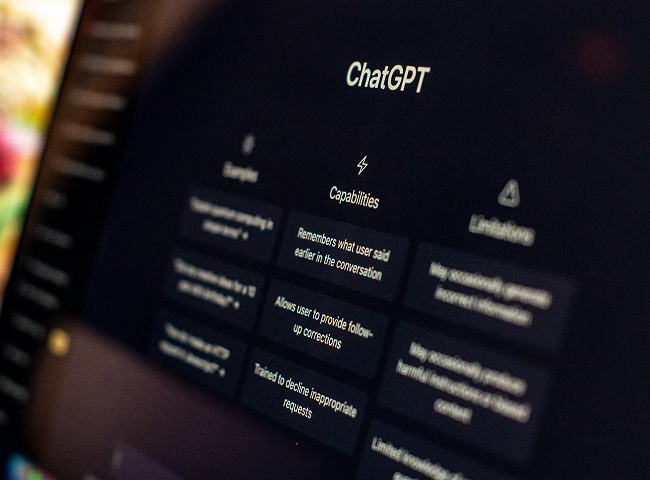
Wall Street Insights OpenAI launched ChatGPT ad testing in February, but the much-anticipated commercialization attempt is facing aA “rushed” and “chaotic” start.
According to Zhuifeng Trading Desk, on February 23, UBS (UBS) released the “ChatGPT Advertising Experts Conference Call Minutes”. An expert with a digital advertising budget of approximately US$800 million bluntly stated that the ChatGPT advertising experience is “worse than the early days of Google, Meta and even Snapchat.”
Although the market hopes that ChatGPT advertising can shake the dominance of Google search,The current advertising budget only comes from manufacturers’ test expenditures (accounting for less than 10% of the total budget), which has no impact on Google.
The current minimum participation threshold of $200,000, confusing user experience, and suboptimal ROI mean thatThe road to commercialization of ChatGPT advertising is still long.

OpenAI has set a minimum spending commitment of $200,000 for ChatGPT ads, which effectively limits participants to large advertisers with a monthly budget of more than $10 million. Testing begins in February and its duration has not yet been determined.
Although the threshold is high, the enthusiasm for market participation is not low.The expert observed widespread vertical industry adoption – furniture retailers, automotive, subscription-based consumer goods, luxury goods, B2B and food industries all participated. Advertisers can choose the ad formats they want to test.

ChatGPT currently offers four ad formats, but experts predict it may expand to 15-20 in the future:
Sponsored Recommended AdsAs the mainstay of brand advertising, brand text is inserted into natural responses to user queries and is priced based on CPM (cost per thousand impressions). The current average price is about $60.
carousel adsUsers can scroll through multiple images, each of which can be clicked to jump to a specific product. However, the function is still immature. Each picture only links to one SKU, and all pictures jump to the same landing page of the merchant website. There are still many shortcomings compared to Google and Meta.
Accompany display adsAppears next to the chat text as a display version of the Sponsored Recommendation ad. Experts point out that advertisers can directly reuse existing creative materials, lowering the adoption threshold. The format is positioned as a brand ad, with success criteria being a combination of raising awareness and driving traffic.
Native content shopping cart adsProbably the closest form to “intelligent advertising”. After users click on a product, they do not need to jump to the seller’s website, but can complete product details viewing and checkout within ChatGPT. This format charges based on a percentage of GMV (gross merchandise volume).
But this closed-loop trading model has also caused controversy. Experts pointed out thatThe format is suitable for high-volume, commoditized products that high-end brands may be hesitant tothey lost the opportunity to upsell to users, were unable to strengthen their brand image through the official website, and were unable to collect user information for remarketing.

The current advertising budget of ChatGPT comes entirely from the advertiser’s test budget.There has been no impact on Google search budget yet.Experts point out that brand advertising budgets usually have an upper limit, and the budget may be transferred from other channels in the future; but performance budgets (if ChatGPT can continue to prove improvements in return on advertising expenditures) may be incremental budgets.
When it comes to ad performance, the data is mixed. ChatGPT ads are generated“Good CTR” but mixed ROAS performanceand the amount of data is limited and the sample size is small, making it difficult to draw definite conclusions.
In terms of pricing, the CPM of $60 is significantly higher than social media and streaming advertising. But experts believe that comparison should not be made with these channels, but with Google search. Based on the calculation of $2 per click on Google search ads and 200 conversions per thousand clicks, the cost per conversion is $40. In comparison, ChatGPT’s $60 CPM is not expensive.
But the problem is conversion rate. The average conversion rate for sponsored referral ads is less than 0.5%, which means the cost per click is about $12. Based on this, experts believeReturn on ad spend must improve to remain commercially viable.

Experts unceremoniously describe the current ChatGPT advertising experience as“Hurry” and “chaos”,Even “worse than the early experiences of Google, Meta and even Snapchat.”
Core issues include:
Lack of performance dataMaking it difficult for advertisers to measure and optimize ad units, experts expect this to be a priority issue for ChatGPT to solve.
No CRM integrationThis means that the ad is showing static information – even if a specific product is out of stock or unavailable, the ad will continue to show.
Completely manual operationIt’s the biggest pain point. Google and Meta already offer automated products to assist with creative production, selection and delivery, but ChatGPT advertisers currently must manually select all content. Experts believe that OpenAI’s generative AI and agent capabilities should have easily solved this problem.
Limited bidding mechanismIt’s also a big flaw. Currently, if two advertisers bid for the same ad space, OpenAI will only display the more relevant ad. In contrast, Google uses the dual criteria of price and relevance to determine ad impressions.
Ad serving and targeting issuesIt also stood out – in some cases, ChatGPT showed users irrelevant ads. Experts speculate that this may be because ChatGPT currently uses keyword targeting instead of LLM capabilities to determine the suitability of ads and content. Experts believe this should be a “quick fix” issue.

Despite current problems, experts expectIn the next 6-12 months, ChatGPT will be a more scalable advertising platform.The minimum spending threshold is also expected to drop by then, allowing more advertisers to participate in the test.
But for investors, the core question remains: When will ChatGPT ads really start eating into Google search market share? The current chaotic start and unsatisfactory returns suggest that this day may comeLater than the market expected.
Related reading: