Physical Address
304 North Cardinal St.
Dorchester Center, MA 02124
Physical Address
304 North Cardinal St.
Dorchester Center, MA 02124

This article is forwarded from the WeChat public account: Sydney Today
recently,
An Iranian psychologist working in Australia
It was revealed that his father was actually a high-ranking member of the Iranian military.
This incident caused an uproar.
A large number of Australian people
is strongly calling on the government to cancel his visa,
and repatriate them.
01
Daughter of Iranian commander emigrates to Australia
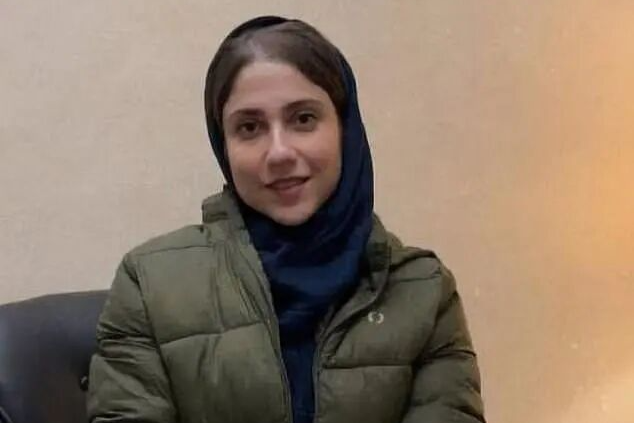
The central figure in this uproar is Hanieh Sadat Safavi.
It is reported that Safavi has lived in Australia for two years, once lived in Townsville, Queensland, and now lives in Melbourne.

She described herself as a counselor on her now-deleted LinkedIn profile.
However, her deep ties to the Iranian regime have deeply disturbed countless Iranian immigrants who have fled to Australia in search of safety.
According to public information, her father is Iranian Major General Yahya Rahim Safavi, who once served as a senior adviser to Iran’s Supreme Leader Ayatollah Ali Khamenei.
Not only does it support many policies that violate human rights, but it also has close ties with the Islamic Revolutionary Guard Corps (IRGC), which is listed as a KB organization in Australia.
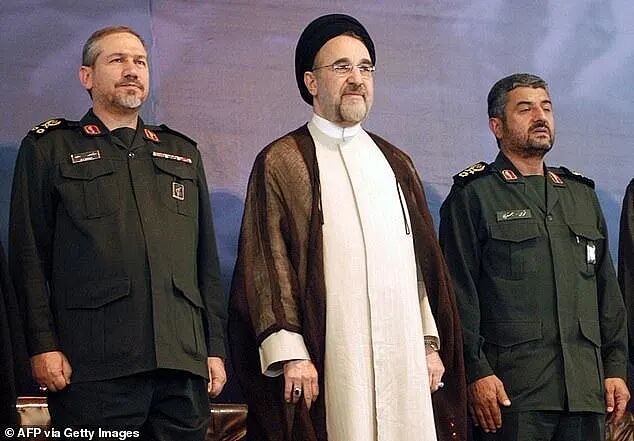
Her father, General Yahya Rahim Safavi (first from left)
Yahya Rahim Safavi has long been regarded as one of the core figures of the Iranian regime.
Previously, the Australian government had officially classified the Islamic Revolutionary Guard Corps (IRGC) as a state agency supporting KB doctrine after expelling the Iranian ambassador suspected of instigating attacks on Jewish targets in Melbourne and Sydney.
02
Get PR in 8 months
Hanieh Sadat Safavi obtained an Australian student visa in February 2024 and was approved for permanent residence through the 189 independent skilled immigrant visa in October of the same year. It only took 8 months from entry to obtaining PR.
During the same period, she also completed provisional registration as a counselor with the Australian Health Practitioner Regulation Agency under the name “Hanieh Sadat Safavi Homami”.
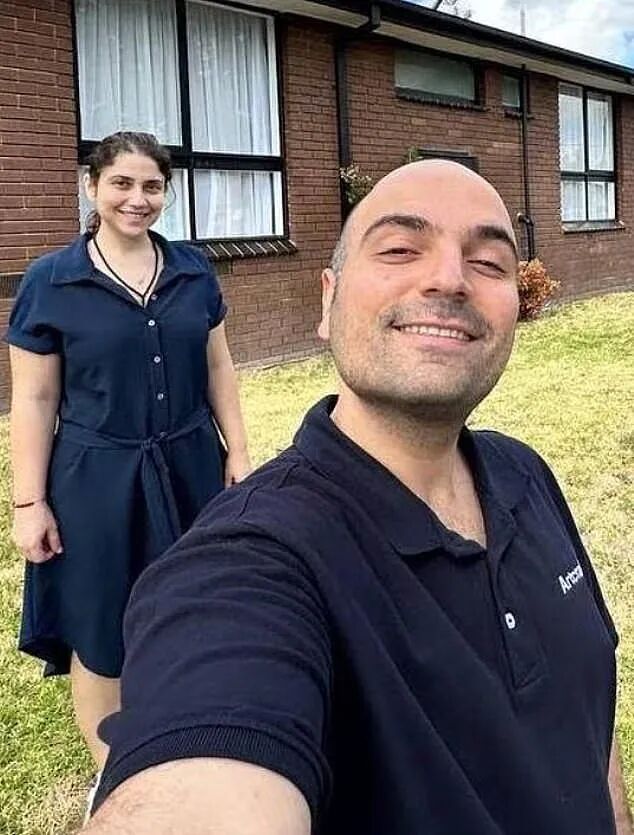
She holds a master’s degree from Tehran University and her provisional registration was approved in October last year.
However, because her foreign academic qualifications have not yet completed the transition period evaluation, she does not yet have formal qualifications to practice.
The development has sparked intense unease among Australia’s Iranian community.
Suren Edgar is the vice-president of the Iranian Community Alliance of Australia and moved to Australia from Iran as a refugee in 2014.
He said in an interview that those fleeing Iran still fear reprisals.
He emphasized that this was not to deprive the other party of opportunities because of who his father was, but to ensure that Australia could apply consistent and strict standards when it comes to national security and foreign interference risks.
Like many of his compatriots, he paid a heavy price for escaping political oppression in Iran.
It is unacceptable to see cases with diametrically opposite backgrounds being approved for permanent residence in a short period of time without any public explanation.
Suren Edgar pointed out that ordinary applicants usually have to wait five to seven years to obtain permanent residence, but Hanieh Sadat Safavi’s approval speed was obviously abnormal.
He questioned whether the relevant authorities had conducted adequate security checks on his background, especially if his immediate family members were closely related to entities recognized by Australia as the KB organization.
03
80,000 people signed a petition calling for deportation
Faced with pressure from public opinion, the Australian Department of Home Affairs responded that due to the principle of privacy protection, it was unable to provide specific explanations on individual cases.
However, the spokesperson also emphasized that all visa applications are independently assessed based on health, character and national security standards. The Ministry of Home Affairs maintains close coordination with law enforcement and intelligence agencies. Anyone who may pose a threat to national security will be refused entry or have their visa cancelled.
Currently, a petition launched on Change.org calling for Safavi’s repatriation has collected more than 80,000 signatures in less than a month.
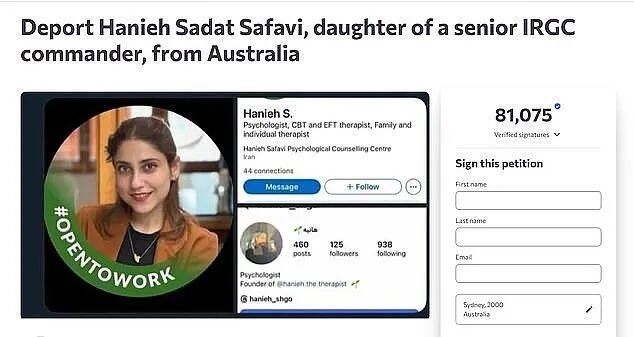
The sponsors of the petition stressed that Australia must not become a safe haven for oppressors and their relatives, and asked the government to conduct a transparent and legal review of Safavi’s residency status.
They said this was not discrimination but a call for accountability and respect for Australia’s core values.
It remains to be seen whether the case of Hanieh Sadat Safavi will be re-evaluated and whether the petition results can be translated into policy responses.
Related reading: