Physical Address
304 North Cardinal St.
Dorchester Center, MA 02124
Physical Address
304 North Cardinal St.
Dorchester Center, MA 02124


Source: Let’s Talk in the UK
Some time ago, an interesting but subtle topic suddenly popped up on Xiaohongshu.
The cause is simple – a photo.
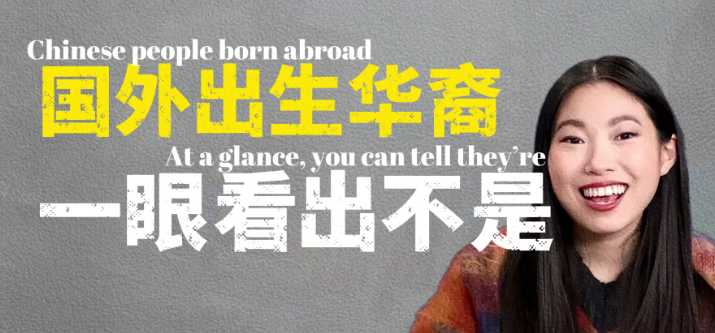
A Chinese-American girl participated in a local children’s beauty pageant in the United States. The photo was transferred to a domestic platform, and the comment area quickly went viral. Some said she was “too Chinese-looking,” some said she was “not good-looking enough,” and some concluded with a very firm tone: “This is a typical ABC face.”
If you want to say there’s something wrong with her, you can’t seem to tell. Her facial features are still Chinese, and her skin color and hair color haven’t changed, but it’s just like that – as long as you glance at it, a label will automatically pop up in your mind:She didn’t grow up in China.
So the comment area quickly slid from “Is this little girl good-looking?” to a bigger question:
Why do Chinese people look like they grew up abroad?

Chinese internet celebrity Lil Tay
Note that the word “unlike” here is not actually a derogatory sense, but a very subtle intuitive judgment that many people know well.
When you see a girl on the street, you may not even say a word, but you will subconsciously think: Oh, she should be ABC.
Where did this “one-sight recognition” come from?
Many people’s first reaction is: the temperament is different.
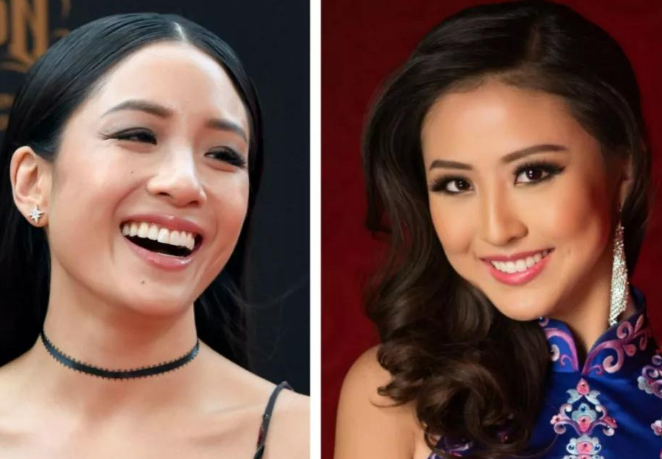
really. The ABC girls’ stance, expression, walking style, and smile range are all very different from domestic girls, but what’s even more confusing is——The difference seems to be not only at the “feeling level”, but even the structure of the face is a little different.
for example:
Lucy Liu’s very obvious, strong jawline;
There are also Chinese girls who can be seen everywhere on the streets and campuses of North America. When placed in the crowd, their face does not look like the East Asian face in the traditional impression, nor is it exactly the same as that of white people or Latinos.

So everyone began to wonder: Is this really just a matter of “makeup style” and “dressing temperament”?
Or should I say, some changes are actually inDid it happen earlier and at a lower level?
If you put girls who grew up in China and ABC who grew up overseas, you will find a point that is easily overlooked:What they eat is really different.
It’s not as simple as “Chinese food” and “Western food”, but – starting from infancy and early childhood, the nutritional structure has already bifurcated.
The Western diet as a whole tends to be high in protein, high in fat, and high in calcium, such as beef, dairy products, cheese, and butter. They are frequent guests on many children’s dining tables, and these foods can directly stimulate bone development.
On the other hand, we have eaten more rice, noodles, vegetables, and meat since childhood, but the proportion is not that high.

The result of this incident is that the bones of overseas Chinese are overall “stronger”.
Specifically on the face, the mandible is wider, the cartilage of the bridge of the nose is more developed, and the overall three-dimensionality is higher. However, the facial skeleton of domestic girls is relatively flatter and softer.
It’s not who is more beautiful, it’sPhysiological shaping caused by long-term dietary differences.
Another underestimated factor: What do you chew every day?
Besides what to eat, there is a more serious question:How long do you chew each day?
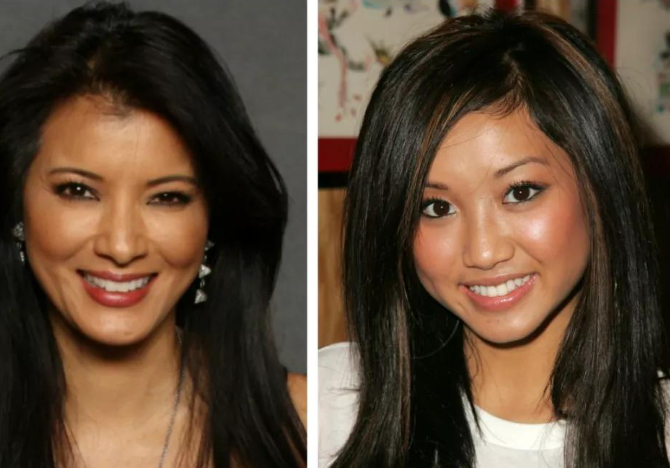
In the Western diet, steaks, burgers, and barbecue foods that “require hard chewing” account for a very high proportion, and long-term high-intensity chewing will directly stimulate the development of the masseter muscle and mandible.
A study tracked the facial changes of ABC girls and domestic girls during adolescence and found that the thickness of the masseter muscle and the area of the zygomaticus muscle increased significantly faster in girls who grew up overseas.
In human terms: the face is “chewed” out.
By the time you reach your twenties, this longitudinal stretching and bone contouring will become very obvious, making you look more “Western” at first glance.
If you have lived in places like California and Australia, you will find one thing: they really love the outdoors.
Since childhood, you have been exposed to the sun, playing ball, camping, and surfing. The intensity of sunlight in high-UV areas, coupled with the frequency of outdoor activities, will cause the skin to age faster, make the texture more obvious, and the overall appearance will tend to be “rough”.
Plus another key point: they really love to use their faces.
Raising eyebrows, grinning, and wide-ranging expressions are very normal ways of expressing emotions in Western culture. But here, we have been taught from a young age to “keep it down”, “don’t be too exaggerated” and “girls need to be quiet”.
Over time,These expression habits will be “engraved” directly on the face, forming a very typical “ABC look”.
It’s not something that makeup can fix.
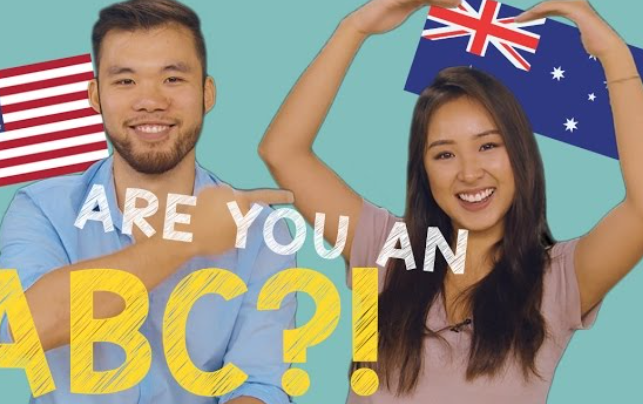
The aesthetic template accepted by overseas Chinese is often a different set: three-dimensionality, presence, a big smile, and clear outlines.
When a person practices expression, makeup and self-presentation according to a certain aesthetic for a long time, her face will really “lean” in that direction slowly.
This is not an act, it is the body adapting to the environment.
When it comes to this step, it is actually not just a matter of face.
For many Chinese girls who grew up in the United States and Canada, the question “who am I” has existed since childhood.
At home, they are required to retain traditional values; in school and society, they have to learn to integrate into mainstream culture; at the same time, they have to face various projections and labels about race, gender, and appearance.
This long-term identity pull will make a person form a very complex, but also very unique temperament. It’s not that they’re “un-Chinese”, it’s that they are in a more mixed position.
This is reality. Every ABC face is the result of the joint action of diet, sunshine, culture, language and identity. It is aA cross-cultural self-portrait。
If I have to say it, it might be because–they have grown into what they should be.
And the reason why we feel strange is that this kind of appearance is not quite in line with the aesthetics we are used to.
Related reading: