Physical Address
304 North Cardinal St.
Dorchester Center, MA 02124
Physical Address
304 North Cardinal St.
Dorchester Center, MA 02124

This article is reproduced from the public account: Sydney Impressions
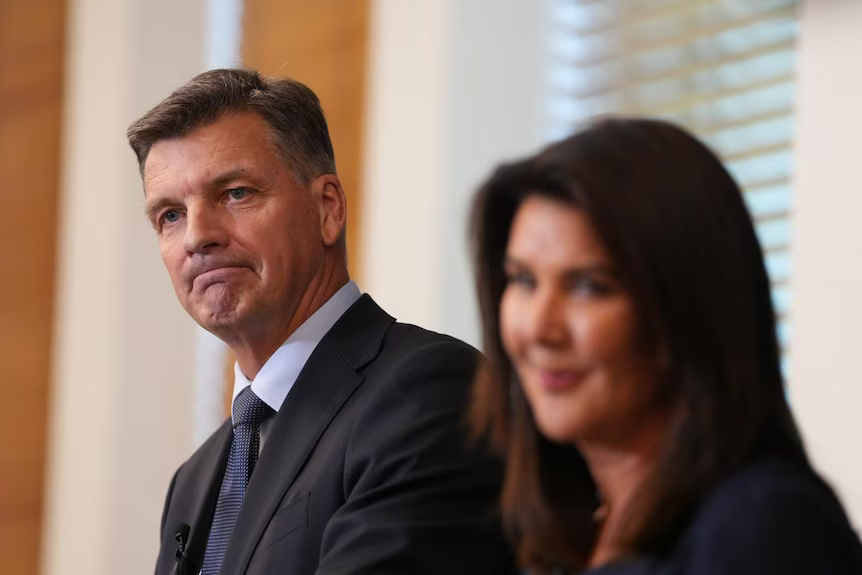
According to Australian media reports, the new leader of the Liberal Party, Angus Taylor, is trying to unite the parties that broke away from the National Party this year. His ascension almost heralds a further shift to the right for the Liberal Party in response to One Nation’s growing popularity.

As the leader of the opposition party, Taylor’s core advocate is a tougher immigration policy. Last Friday, he declared that “the door must be closed to those who do not share ‘Australian values’.”
The party has yet to formally announce any policy, but senior sources say the Liberals are actively discussing a controversial immigration policy inspired by recent policies of the British Labor Party.
At the end of last year, the British Labor Party adopted a tough immigration policy and announced that if the governments of certain African countries did not cooperate with the UK in repatriating their citizens whose visas had been cancelled, they would refuse to issue visas to these countries.
In February this year, the three relevant countries cooperated with the UK in repatriating their citizens.
Under the policy being considered by the Liberal Party, if a country refuses to accept its citizens who have been refused visas by Australia, Australia will blacklist that country (or specific areas of it) and ban its citizens from obtaining visas.
According to reports,A Liberal Party proposal that would ban immigrants from as many as 13 countries or regions has been exposed, including specific areas of Gaza, Egypt, Somalia and the Philippines.
The policy will suspend the issuance of visas to citizens of areas considered to be controlled by terrorist organizations for up to three years.
Senior party sources emphasized that the policy is still in the draft stage and may be revised, but it involves as many as 13 countries or regions related to high-risk security issues, including Egypt and large areas of Africa.
The proposal was drafted by home affairs spokesman Jonno Duniam, immigration spokesman Paul Scarr and advisers from the office of former Liberal leader Sussan Ley. The proposal is currently awaiting review by Taylor.
National Party deputy leader Kevin Hogan said the plan had not yet been submitted to Sussan Ley’s shadow cabinet, so its status could not be confirmed.
It is understood that the proposal is not a comprehensive ban on entry of all persons from Somalia or the Philippines.
The report pointed out that the plan targets areas that have long suffered from terrorist occupation or insurgency, such as Mindanao in the Philippines, parts of Somalia and Yemen.
Under the Liberal Party’s draft policy, immigrants on temporary visas could also face deportation if they are found to have violated “Australian values” as defined by the party.
It is understood that the policy proposal Taylor is considering is part of a broader radical reorganization of Australia’s right-wing politics.
The shift has sparked controversy within the already-divided Liberal party, with repercussions that extend beyond the battle between moderates and conservatives, who are divided over how to win back voters who have abandoned the party.
There are deeper divisions within conservatives: some advocate emulating the populist strategies of Donald Trump and Britain’s Nigel Farage, while others insist on following the economic tradition of John Howard and Peter Costello.
With the right taking control, the Liberal Party is locked in a battle between one side that wants a radical change of direction and the other that sees such a move as tantamount to political demise.
After winning last Friday’s leadership election, Taylor declared that the party “must move forward and put the recent strife behind us.”
Taylor’s promotion signals that the party will move further to the right on cultural issues and immigration policy, which may exacerbate intra-party divisions.
Taylor represents a group of Liberal MPs who believe traditional economic policies are the way to win back the median voter.
On the other side, a group led by Andrew Hastie is pushing for a more populist “Australia first” approach, which focuses on reducing immigration and investing in local manufacturing.
Victorian Liberal Senator James Paterson, a key figure in the conservative camp, switched his support to Taylor. Paterson said the change in leadership was about strengthening the party’s traditional supporters.
However, Paterson admitted that conservatives within the party were divided over the future direction.
But the conservative forces influencing the party don’t just come from within.
One Nation’s rise has shaken the Coalition and prompted Liberal and National Party members to take a tougher stance on immigration and economic policy to avoid losing votes to the right-wing party.
Taylor showed a strong stance in his first public appearance as leader of the opposition party on Friday. His immigration and economic policy proposals are consistent with the views of his populist Liberal colleagues.
Paterson denied the party was moving to the right to appeal to voters who were switching to One Nation.
Recent poll results show that One Nation’s propaganda strategy is working, but how many votes the party can attract by taking a tough stance on issues such as immigration policy has become a life-and-death issue facing the Liberal Party.
Related reading: