Physical Address
304 North Cardinal St.
Dorchester Center, MA 02124
Physical Address
304 North Cardinal St.
Dorchester Center, MA 02124

This article is reproduced from the WeChat public account: Australian Red Collar King
Australian passports have quietly increased in value again
Many people have not yet realized that a policy discussion that seems “far away from life” has quietly changed the value of Australian passports.
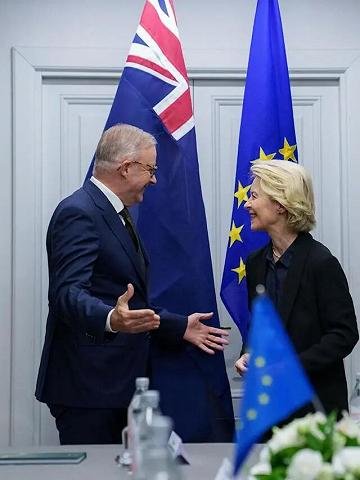
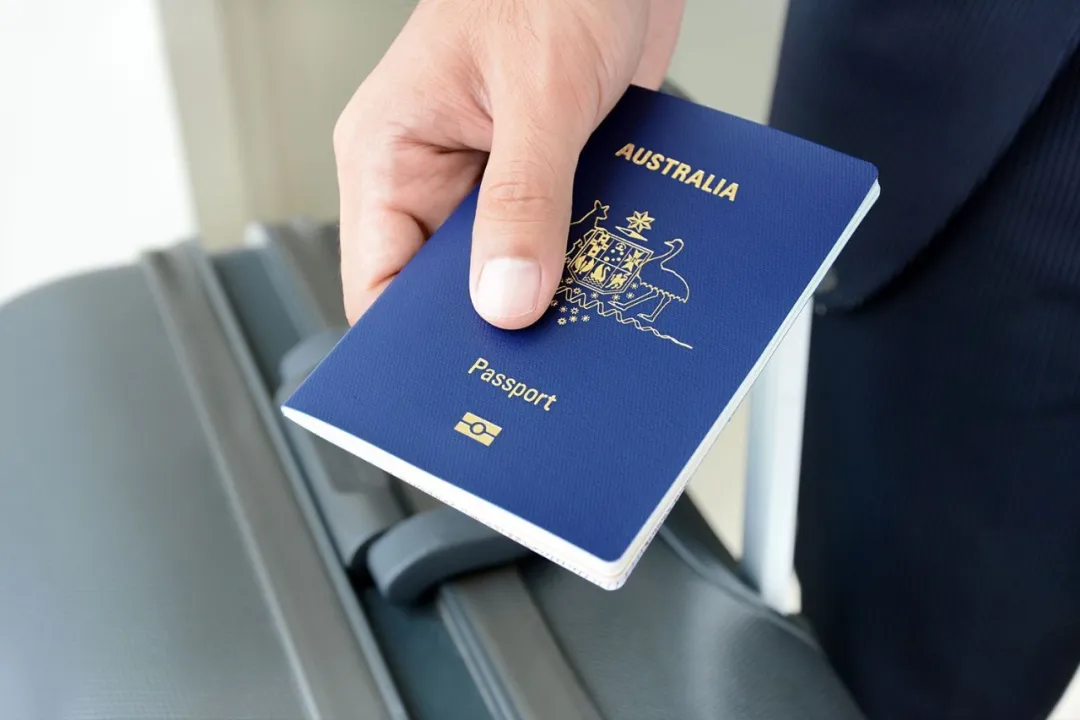
Recently, a new trend launched in Europe has caused many Australians to re-examine the dark blue booklet in their hands. It is not a simple increase in visa exemption, but a more direct and bold signal: in the future, it may become easier than ever for Australians to live and work in Europe.
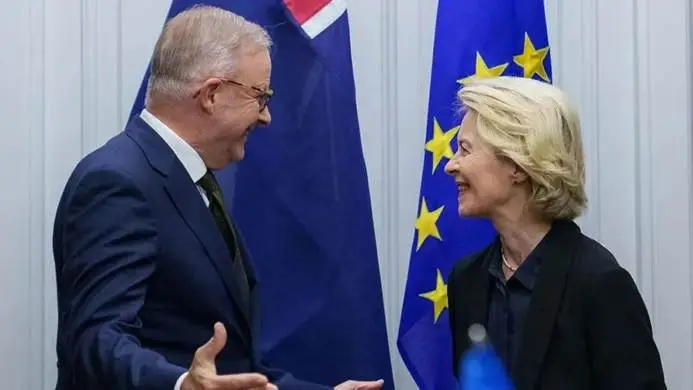
This is not about travel convenience, but “people can live and work directly there.”
The wind of interconnection between Europe and Australia is really blowing
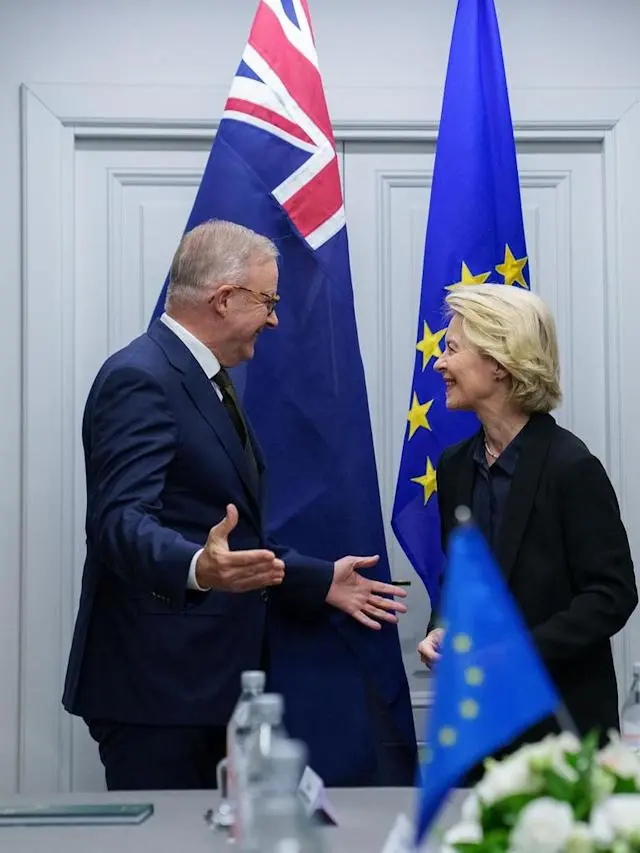
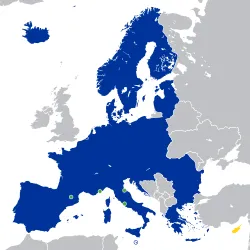
Europe recently proposed a new idea of people mobility, with only one sentence at its core: allowing Australian citizens to live and work freely within the EU.
What will it mean if this arrangement finally comes to fruition? This means that Australians who want to go to Europe in the future will no longer need to get an employer offer in advance and will no longer be stuck by complicated visa thresholds. Instead, they can directly choose the country, city and lifestyle just like in another “enlarged version of Australia”.
It was mentioned in relevant discussions that the period of residence may be set to several years, and the possibility of subsequent long-term residence or even settlement is not ruled out. As a reciprocal condition, EU citizens will also be allowed to enter Australia to live and work in the same way.
For the Australian government, this hits a real pain point. Local labor shortages have long existed, especially in fields such as construction, engineering, and manufacturing. The skill systems and training standards of these industries are very close to Europe and can be almost seamlessly connected.
Of course, when the news came out, the reaction was not uniform.
Some people are excited, thinking that Europe has a diverse lifestyle, a high cultural density, and some countries’ income and welfare are not low. Finally, there is a truly optional “branch of life.”

Some people are calm or even repulsive, saying that Europe has frequent security problems, high taxes and heavy welfare, and is far less cost-effective than Australia. They are even worried that the flow of people will bring additional social risks.
But no matter what the attitude is, there is almost a consensus on one thing: once this interoperability mechanism is really implemented, the weight of the Australian passport will rise even further.
As soon as the latest passport list came out, the changes have been obvious
While this wave of discussions continues to ferment, the latest year’s global passport validity rankings are also announced simultaneously.
The results are not surprising, but upon closer inspection, the amount of information is quite large.
The Australian passport remains firmly in the first echelon, with visa-free coverage remaining at a high level and ranking among the top in the world. Its advantage lies not in “sudden surges”, but in long-term stability, with almost no sharp declines.
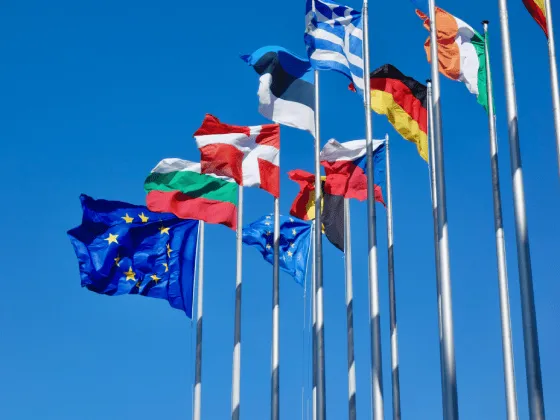
On the contrary, the passports of traditional powerful countries are obviously “inadequate” this time. The ease of travel between the United Kingdom and the United States continues to shrink, and the number of visa-free destinations lost in the past year is particularly eye-catching among major countries. Although the United States has returned to the top ten, the overall trend is still weak.
Asian passports remain strong, with Singapore continuing to lead, followed by Japan and South Korea. European countries have shown a state of “collectively moving forward and widening the gap internally”.
One noteworthy detail is that Australia is in the same echelon as many high-value European passports, and the UK’s decline is particularly obvious in this group.
The more cruel reality is that the “movement rights gap” between passports around the world is constantly widening. The strong ones moved further and further away, while the weak ones were almost locked in place. This is not just a matter of travel convenience, but a comprehensive reflection of whether a country can be trusted, whether it is stable, and whether it has the right to speak internationally.
The right to live freely is actually a trade game.
If you stretch the timeline a little longer, you will find that this “sudden show of goodwill” between Europe and Australia is not an isolated incident.
Currently, the Australian government is evaluating the free residence and work plan proposed by Europe, but in the eyes of many observers, this is more like a negotiation chip that has been carefully placed on the table.
Because another main line that has been discussed for many years but has never been reached is heating up again, and that is the Europe-Australia Free Trade Agreement.
This negotiation started many years ago and was very close to being reached, but ultimately collapsed on key issues. Europe hopes that Australia will make concessions on agricultural export quotas and strictly abide by European rules on the protection of designations of origin, while Australia is worried that its agricultural and brand interests will be overly squeezed.
After the negotiations stalled, the global trade environment changed. The impact of new tariffs has put pressure on European exports, and the EU has begun to be more proactive in finding reliable partners to diversify risks.
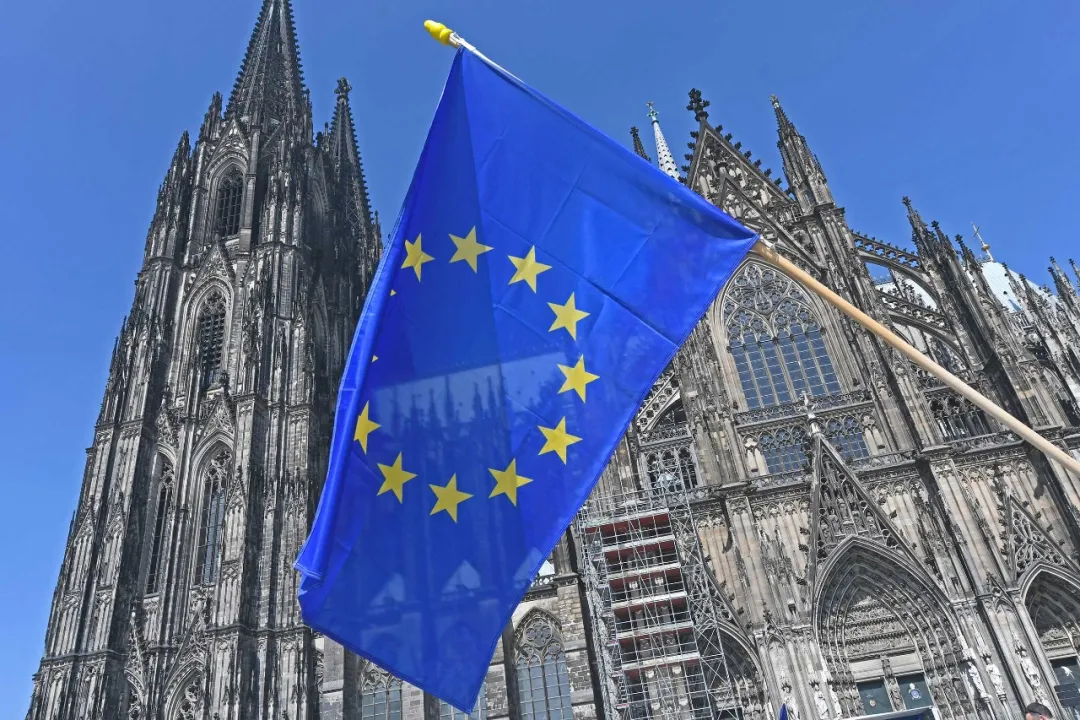
Against this background, Europe and Australia have returned to the negotiating table, and the pace has accelerated significantly. The recent promotion of a number of large-scale trade agreements within Europe has also sent a clear signal: opening up to the outside world is becoming a priority again, and Australia is placed in a very high position.
The Australian government also takes frequent actions, and relevant ministers spend most of their time promoting the resumption of the agreement. Although the opposition parties are cautious, they generally expect that the agreement “will not drag on for too long” and just emphasize that the interests of local industries should not be sacrificed for speed.
Once an agreement is reached, the impact will not stop at the trade level. Key minerals, investment access, and industrial cooperation will all follow. The free movement of people is the most symbolic and most perceptible step in the whole game.
Passport appreciation, what actually changes is the right to choose
Returning to the most realistic level, what all this ultimately comes down to is not the macro narrative, but personal choice.
Not every Australian will want to live in Europe, and not everyone will change their life plans because of this. But when “can I go” becomes “it’s up to me whether to go or not”, the right to choose itself has become precious.
This is a real window of opportunity for those who like the European environment, culture and pace of life. For people who do not plan to leave Australia, the value of this passport has been invisibly reaffirmed by the market and the world.
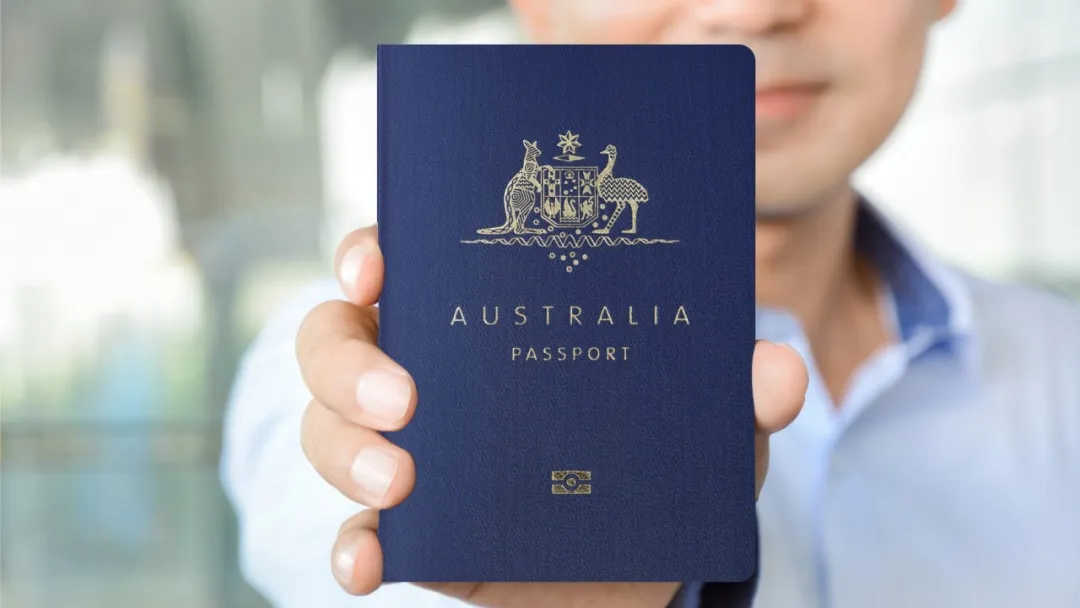
The policy must be controversial, and the game is far from over, but what is certain is that the Australian passport is being repriced on a larger stage.
Related reading: